Blog & Articles
Weds 22 July 2026
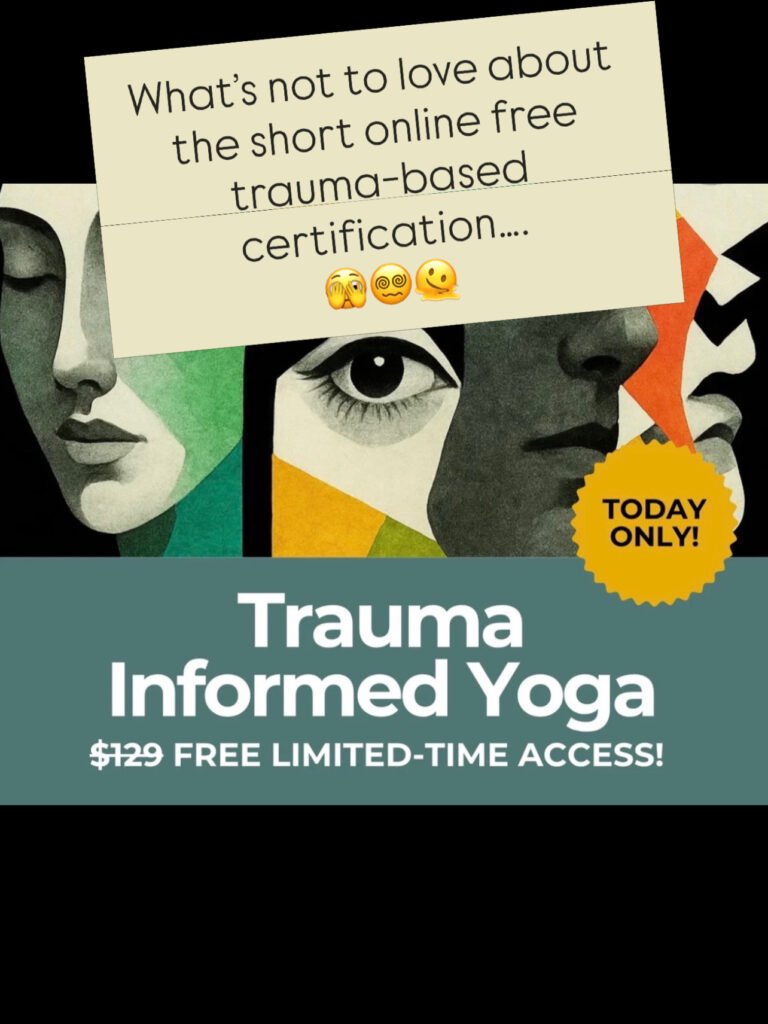
A few days ago an email landed offering me free access to an online ‘trauma informed’ yoga course – complete with certification.
Scroll online and you’ll be inundated with people promising to release trauma, unlock emotions stored in fascia, regulate your nervous system, or facilitate profound healing. Many have huge followings and exceptionally good marketing
Words like trauma-informed, somatic and nervous system regulation have moved into mainstream, yet with their root in psychotherapy they aren’t trends – they describe work that carries real responsibility.
They also equal billions of £s to the wellness industry
And this marketing attracts people who may be vulnerable, desperate, grieving, traumatised or living with chronic pain.
What happens when something goes wrong?
If someone begins to dissociate, experiences overwhelming emotion, uncovers traumatic memories, or leaves a session feeling destabilised?
Learning to guide an emotional release is one thing. Building trust, knowing when not to, knowing what is too much, knowing how to keep someone psychologically safe, understanding trauma, attachment, ethics, safeguarding, contraindications, and the limits of your own competence and when to refer —that is the work.
And often, the people who do have the training, experience and integrity to do this work don’t want to do loads of social media and aren’t great at marketing.
As someone who has spent decades working, studying and experiencing – and is currently undertaking the demands of of psychotherapy training alongside that – the more I witness, the more discerning I become.
The short certification seems to be the trend of our times (hello Pilates industry…)
Combined with a greater than average dose of self-belief, good marketing and an aesthetic Instagram account you can convince people you are qualified to work with their deepest wounds.
If you are looking for support, don’t be afraid to ask questions:
What training have they completed and who insures them?
Who supervises their work?
What happens if a client becomes overwhelmed?
How do they know when to refer on?
Fri 17 July 2026
People often come to Pilates hoping to fix pain and change posture.
Posture is influenced by injury, strength, mobility, and daily habits – and these things absolutely matter, but they’re not the whole story.
When I’m with someone I can begin to sense if life has involved moulding into a shape that doesn’t fit, or trying to go unnoticed. I see where there is too much being tolerated or responsibility being carried. It shows up in how we stand, breathe, the words we use, and how much space we allow ourselves.
Cueing someone to relax their shoulders or stop holding their breath can bring awareness in the moment, but isn’t always enough.
That’s why I don’t see posture as something to fix. I’m more interested in understanding why a body has organised itself this way. And helping someone to explore that (if they want to).
Sometimes what limits movement isn’t just tight muscles or injury. Beneath that is a lifetime of adapting to circumstances, relationships, or beliefs we might not have questioned.
The movement side of my work isn’t just about teaching a set of exercises. They matter, as do the small adjustments and reasons behind how I teach them. But change often increases with a curiosity to look at the life we live inside the body we’re trying to help.
Weds 8 July 2026
The Mind – Body (and Spiritual) Connection – and how it shows up in life (and your Pilates class or Treatment)
Having regular therapy is a requirement of psychotherapy training – to work through your own patterns, mechanisms and triggers – so they don’t take over when working with clients!
When asked what I wanted from therapy, my flippant response was to reach my 50th birthday in a place where I ‘no longer gave a s**t about anything that didn’t warrant it’. And that was pretty true – I didn’t want to waste energy on things that weren’t mine, weren’t necessary, or about what other people think.
How many of us are held back, tripping over ourselves – restrained by things we’ve been told, ways we’ve moulded ourselves to fit it, bound by rules that have told us how things should be. It’s so tiring.
And I see how that shows up in our bodies and our nervous system.
If you come for Pilates or for Massage/Myofascial treatment you might wonder if this is relevant. Yet those beliefs and patterns are showing up:
The tight shoulders that pull you forward – no matter how hard you try to correct your posture.
The gripping hips that cause your lower back to complain when you lift your legs in Pilates.
The face tension as you clench your jaw and unknowingly hold your breath through an exercise.
And when those can let go (even for a moment), you realise you’ve been living with a discomfort that has become so normal you didn’t even realise it was there.
We might pick up an injury running – a repetitive movement pattern has caused a physical injury. But beneath that physical chain of events is deeper information.
The way we subconsciously hold our experiences, beliefs and how we feel about ourselves in our bodies is always there. When we start to bring this stuff into the room it can begin to change the way our body holds itself, and it can change how we experience just being – or doing an activity.
Integration Psychotherapy (which places the body at the centre of our parts) supports what I’ve been seeing for years. And sits perfectly with my holistic approach to movement and bodywork (which I will continue to do).
And my approach supports the part of us that can always connect to who we are, and can always bring us into the present moment – our body.